

Tawíscara: The Hijacking of Democracy
Books and ideas
This sharp critique argues that modern democratic ideals—from democracy, federalism to secularism—were largely absorbed from Indigenous nations like the Iroquois Confederacy, rather than invented in Europe. Majfud traces how Western liberalism hijacked these communal governance models, stripping out their egalitarian core to make them compatible with private property and colonial capitalism. Ultimately, the book delivers a crucial diagnostic of our current political crisis, exposing how corporate interests weaponize democratic vocabulary to protect systemic inequality.
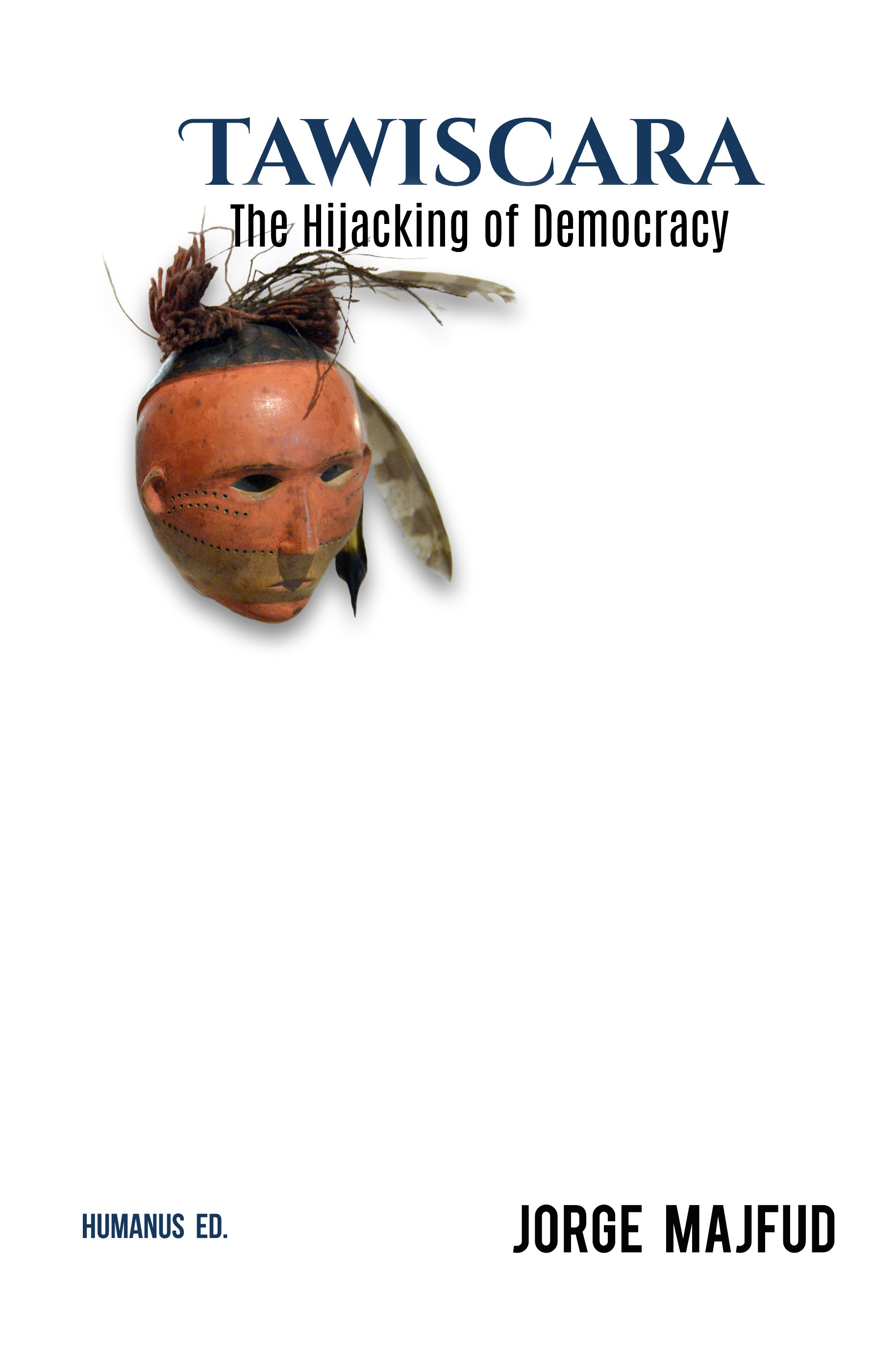
Majfud, Jorge. Tawíscara: The Hijacking of Democracy. Jacksonville: Humanus Ed., 2026.
In the canon of transatlantic intellectual history, the genealogy of modern democratic institutions has long been anchored in a Eurocentric trajectory: a linear progression stretching from classical Athens through the European Enlightenment to the constitutional experiments of the young United States. Jorge Majfud’s Tawíscara: The Hijacking of Democracy offers a sweeping, polemical intervention against this orthodox teleology. Majfud’s central thesis is as provocative as it is epistemologically disruptive: the foundational principles of modern democracy—secularism, federalism, gender egalitarianism, and individual liberty—were not born out of European exceptionalism, but were rather observed, absorbed, and systematically appropriated from Native American societies, with the Iroquois Confederacy functioning as a primary philosophical catalyst.
The book’s title invokes Tawíscara, the duplicitous figure of Iroquois cosmology who achieves dominion not through overt violence, but through the theft of identity and the substitution of reality with a pale, self-serving counterfeit. For Majfud, this myth serves as a potent heuristic for understanding the mechanics of Western political modernity. The West did not invent democracy; it hijacked it, stripping indigenous governance models of their relational, communitarian, and materialist-equalitarian foundations. This co-optation allowed European liberalism to refashion these principles into an institutional framework compatible with absolute private property, colonial expansion, and the rise of mercantile capitalism.
Majfud carefully traces this intellectual trajectory from the initial empirical shock of the transatlantic encounter through the works of Enlightenment chroniclers and philosophers, ultimately culminating in the constitutional architecture of the American founders. He argues that the radical alterity of indigenous societies—characterized by decentralized wealth distribution and collective consensus—shattered the feudal and absolutist paradigms of Europe. Yet, when these insights were codified into liberal political philosophy by figures like John Locke, the concept of liberty was aggressively inverted. Freedom was untethered from communal solidarity and bound instead to the individual right of accumulation. Majfud is unsparing in his critique of this transition, characterizing the foundational liberal mythos—that structural selfishness yields collective societal good—as a fanatical ideological fiction designed to legitimize a neo-imperial order that differs little in its core hierarchy from the Roman Empire.
The visual and metaphorical motifs of the text underscore this ongoing tension between indigenous political philosophy and state co-optation. The juxtaposition of sacred indigenous symbology—such as the Hiawatha Wampum belt—with the machinery of modern military and state power highlights the violent ironies of this historical supplanting. The very symbols of a relational, federative peace were absorbed into the mechanics of an imperial state apparatus that used the vocabulary of democracy to enforce a global capitalist hegemony.
From a historiographical perspective, Majfud’s work aligns with the decolonial turns advanced by thinkers like Walter Mignolo and the late David Graeber. The book’s ultimate strength lies not merely in its historical revisionism, but in its diagnostic utility for the present. By recontextualizing modern liberal democracy as an institutional fossil that has hollowed out its egalitarian substance to serve corporate and financial state power, Tawíscara challenges contemporary political theorists to look beyond conventional Western paradigms. While traditional historians may query the causal weight Majfud attributes to indigenous influence versus European intellectual evolution, the volume remains an indispensable, deeply evocative critique of how power manipulates language to turn critique into a commodity and freedom into property.
Publisher : Humanus
Publication date : July 6, 2026
Language : English
Print length : 528 pages
ISBN-10 : 1956760636
ISBN-13 : 978-1956760637